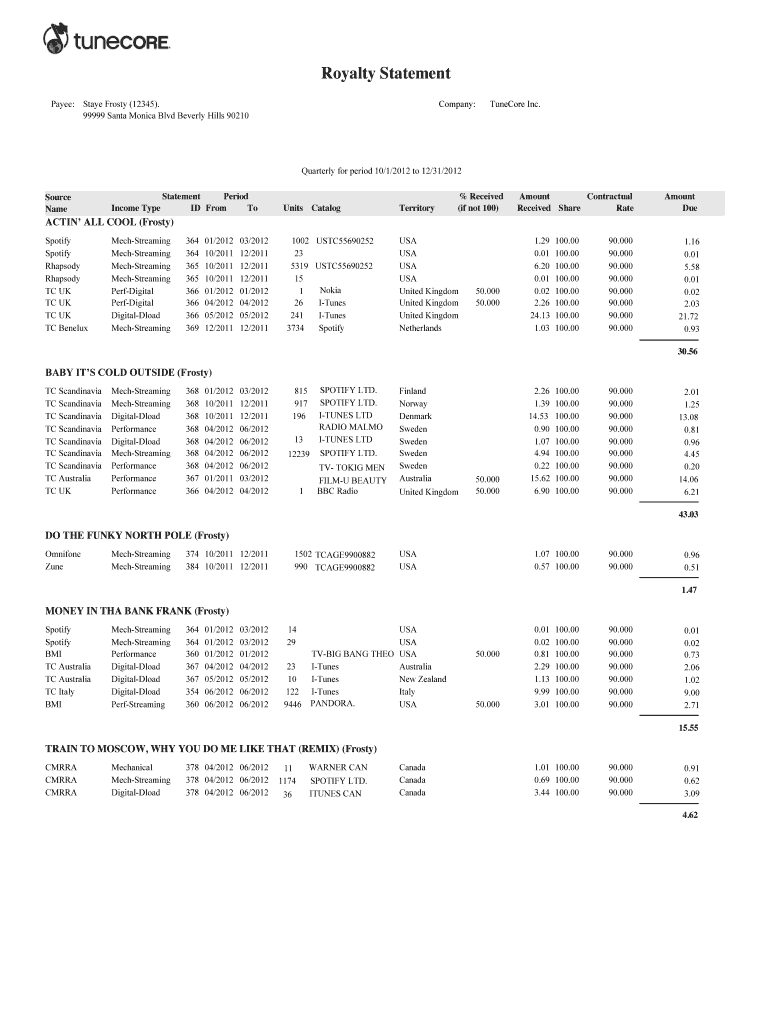
Stop guessing. Learn what every line means, how to spot missing money, and when you should actually expect to get paid.
What you’re looking at
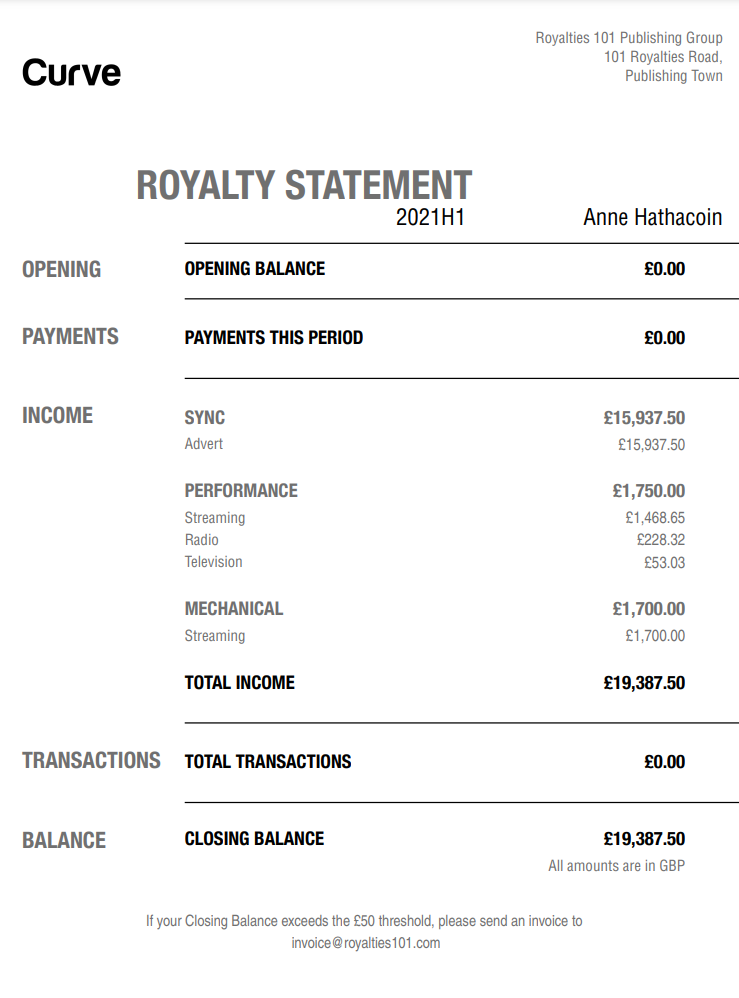
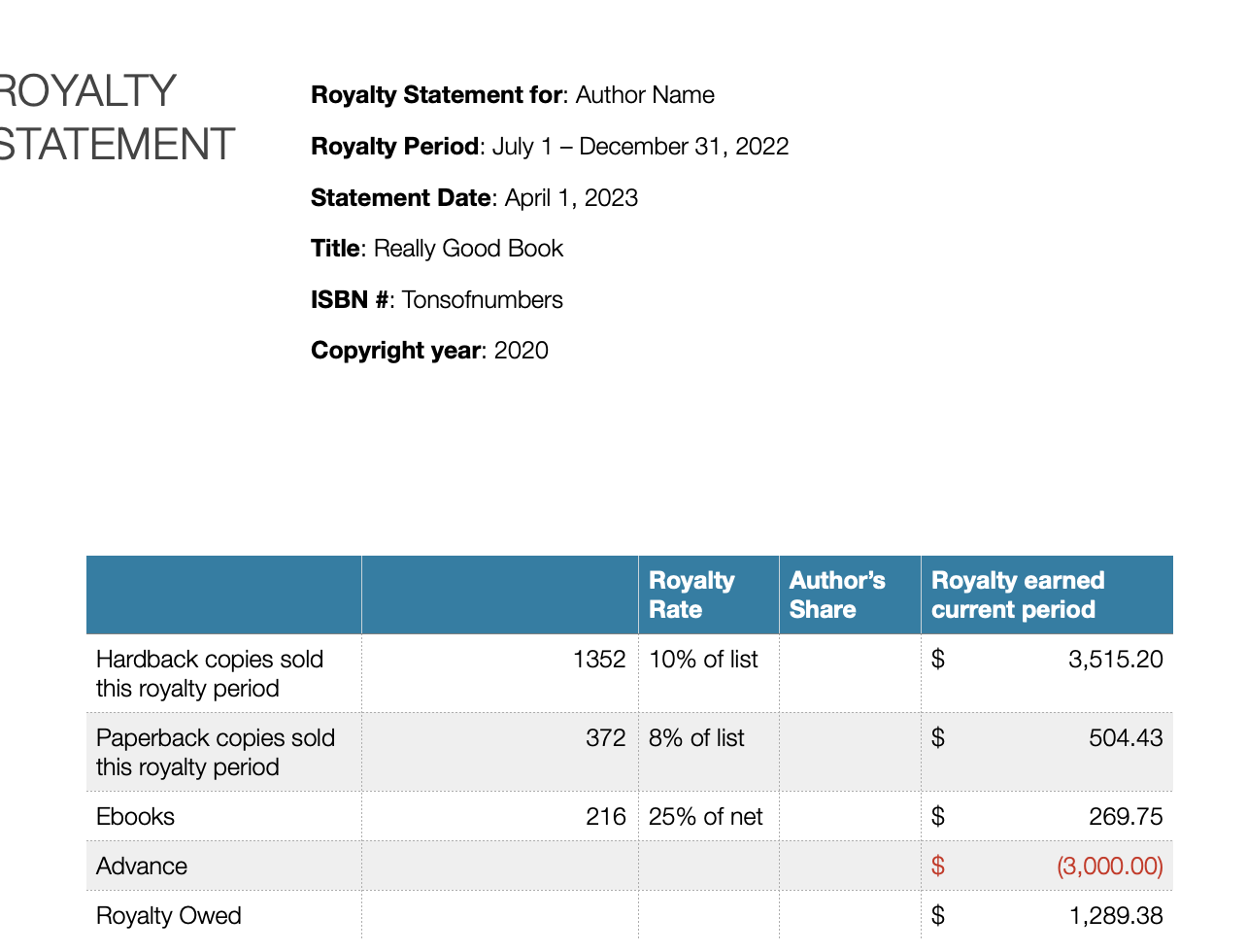
“Royalty statement” is a catch‑all for reports you get from different entities: your PRO (performance royalties), The MLC or your distributor (mechanical royalties), and sometimes a publisher or sub‑publisher (admin and foreign collections). Each uses different layouts, but they all answer the same questions: what earned, where, when, and how much.
Anatomy of a statement
1) Summary/topline
Total royalties: Amount for this statement in the statement currency.
Performance period: The months your royalties were earned (not when they’re paid).
Distribution date: The date funds are scheduled to be paid.
Currency and rate: If foreign income is included, look for the conversion rate line.
2) Earnings by work
3) Earnings by source
Breakdown by performance, mechanical, and sync sources.
4) Earnings by territory
Domestic vs. international income — note collection delays abroad.
5) Deductions and adjustments
Admin fees, taxes, and adjustments — always review for accuracy.
Decode the common fields
Legend of common fields like ISWC, ISRC, IPI, and Source.
Usage date vs. performance period: Actual play date vs. accounting window.
Territory: Country/region of the use.
Share/split: Your percentage of the work.
Status/notes: Flags like “pending” or “unmatched.”
Match lines to payout dates
Timeline from usage date → performance period → payout date.
Your statement’s performance period tells you when the money was earned, not when you get it. To forecast cash, line up each statement’s period with your organization’s next distribution date. Use our 2025 payout calendar to cross‑reference.
Red flags that cost you money
Visual cues for common red flags.
Missing identifiers
“Unknown” sources
Split conflicts
Foreign with no domestic
Negative adjustments
Currency conversions
Mini‑glossary
Quick‑reference glossary for royalty terms.
Performance royalties: Paid for public performances.
Mechanical royalties: Paid for reproductions.
ISWC: Identifier for a composition.
ISRC: Identifier for a sound recording.
IPI/CAE: Identifier for songwriters and publishers.